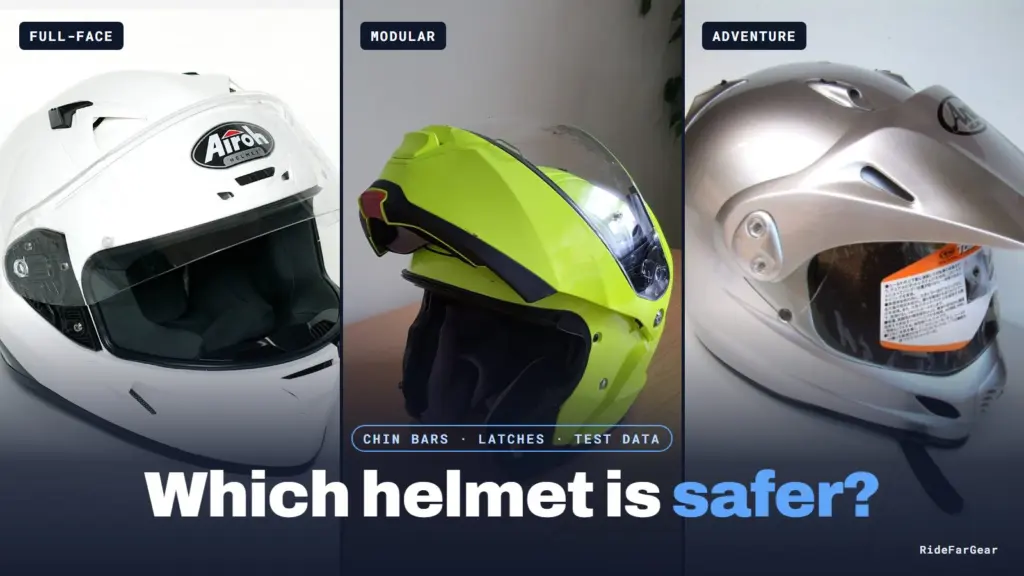
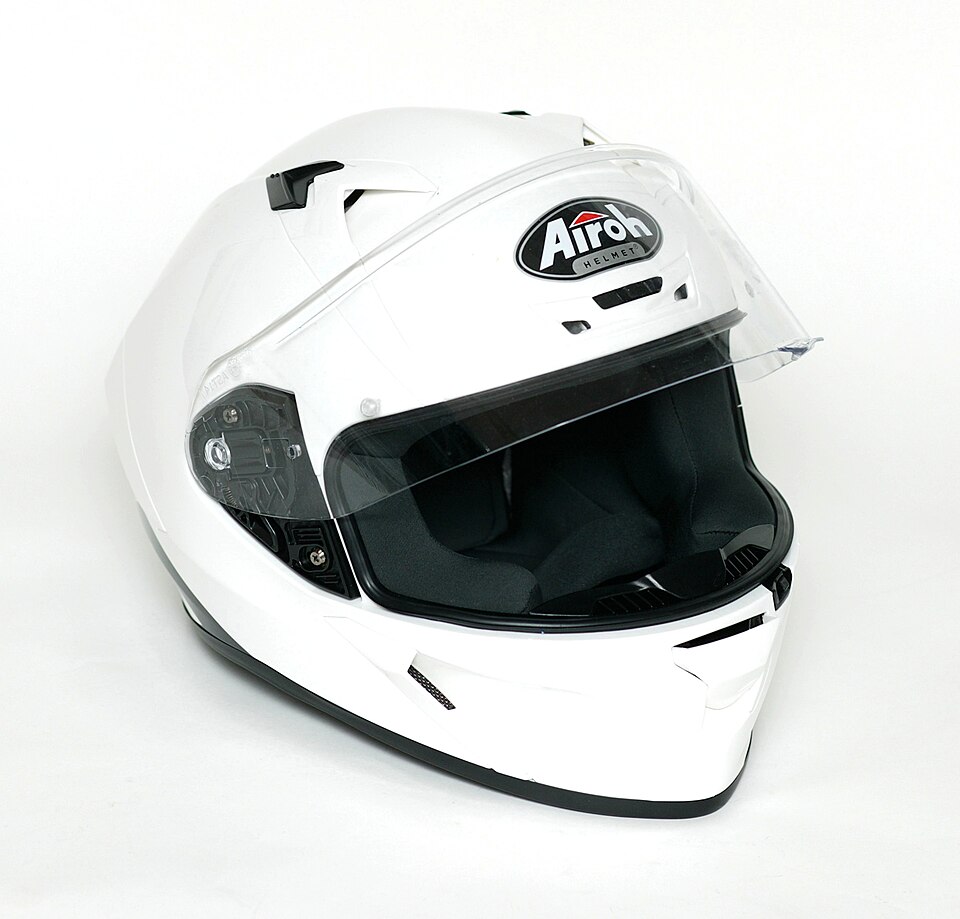
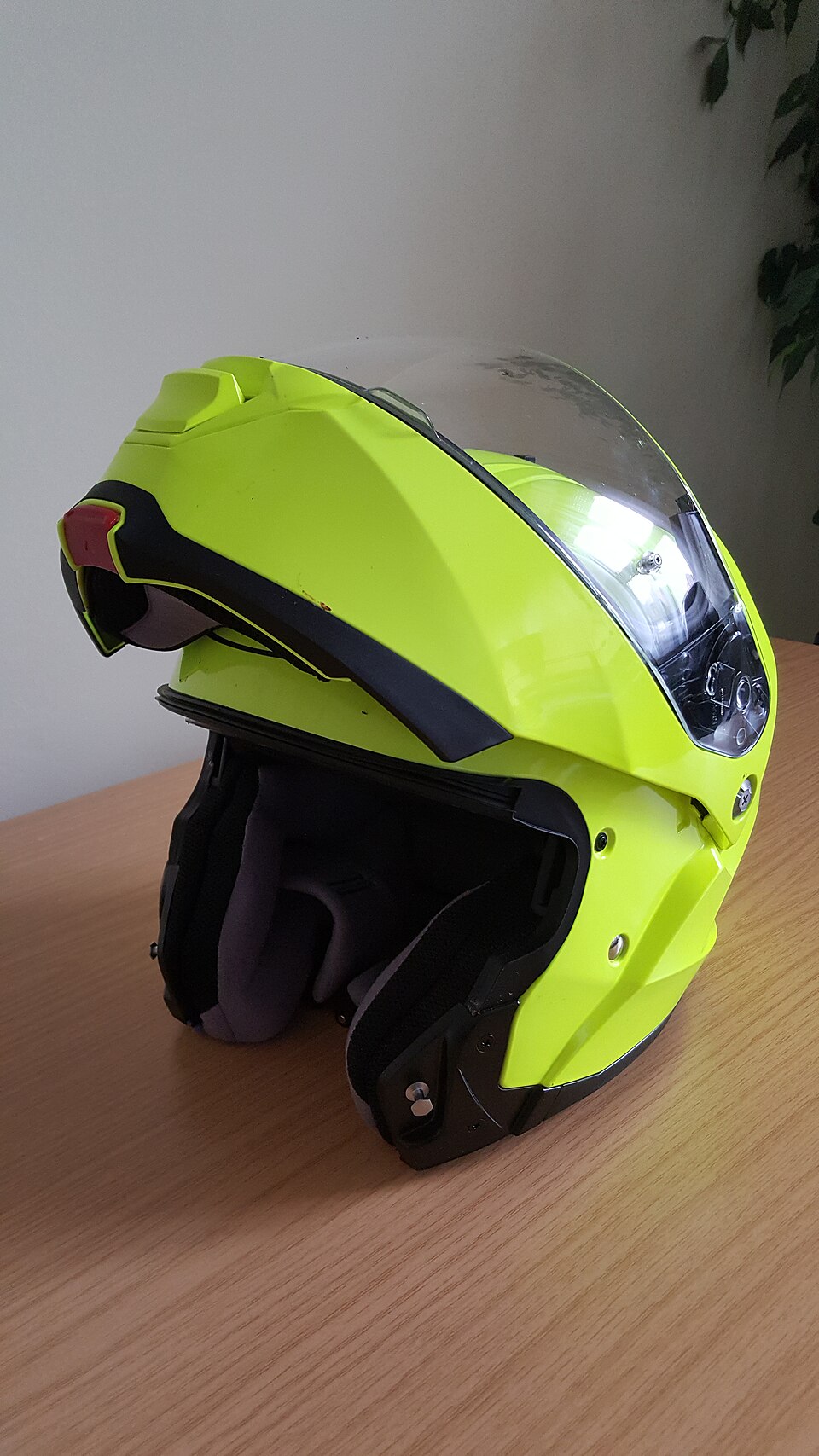
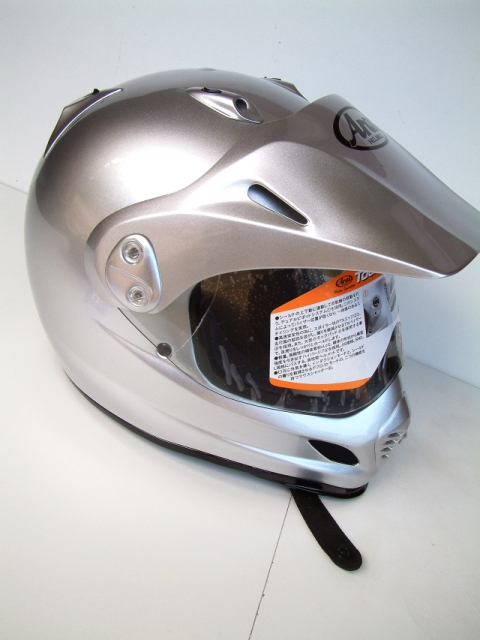
Photos via Wikimedia Commons: Ashley Pomeroy (CC BY-SA 4.0), Mattes (CC BY 2.0 de), vicx (CC BY-SA 2.0).
A full-face helmet is the safest of the three by design, because its chin bar is part of the shell. An adventure helmet is a full-face with a peak, so it protects the same way. A modular helmet is only as safe as its chin bar latch, and independent tests show those latches vary a lot.
That last point is the one most buyers never see. The UK government’s SHARP program publishes it for every modular it tests, and we counted every result.
of helmet impacts
Hit the chin bar area, in a study of 598 crashed helmets.
modulars stayed latched
In all 30 of SHARP’s impact tests.
the worst latch score
The chin bar opened in most of its tests.
The main points
- The chin bar matters. About a third of helmet impacts land on or near it.
- Full-face and adventure helmets have a fixed chin bar. Nothing can come unlatched.
- Modular helmets vary. SHARP’s latch score shows how often the chin bar stayed shut.
- Look for a 100% latch score if you want a modular. Eleven current models have one.
- “P” on the ECE label means the chin bar passed the chin test closed. “P/J” adds open use.
- Fit matters as much as type. A loose helmet can shift before it does its job.
Why the chin bar matters so much
In 1991, Dietmar Otte and colleagues examined 598 helmets from real crashes and mapped where each one was hit. The chin region took the highest share of impacts.
Where 598 crashed helmets were hit
Share of impact points, relative to the area the ECE test standard covered at the time
The 14.1% fell on the margin of the tested area. The chin region had the most impacts, about 34.6% in the chin bar area as reported from the study. Source: Otte and Felten, SAE paper 912911 (1991).
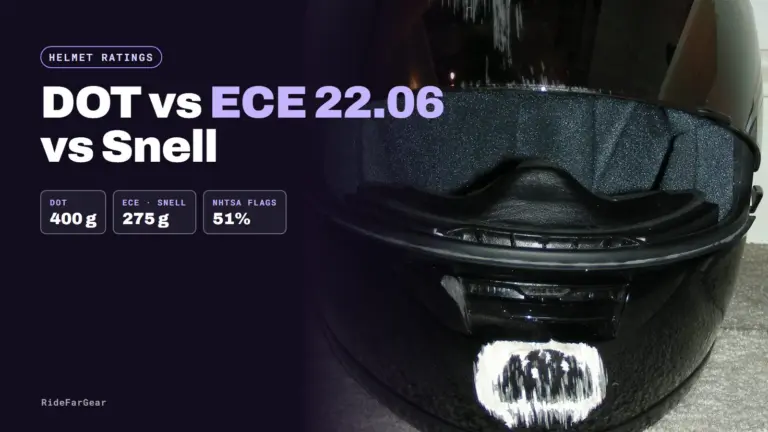
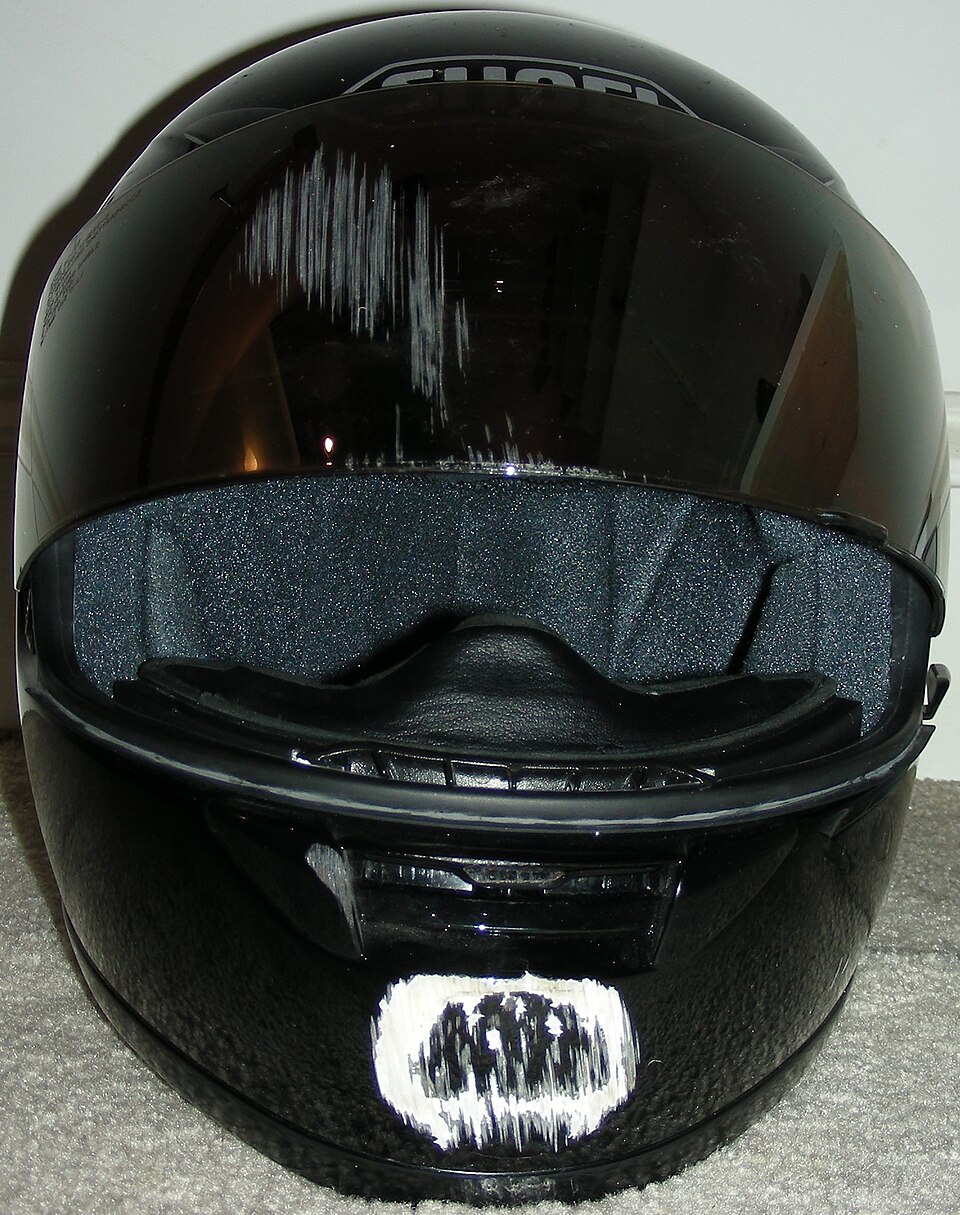
An open-face helmet leaves that whole area to your jaw and teeth. A full-face covers it with the same shell that protects your skull. Here is what that looks like after a real crash.
Modular helmets: the SHARP latch data
SHARP is the UK Department for Transport’s helmet rating program. For modular helmets, it reports a latch score: across its 30 impact tests, the share in which the chin bar stayed fully locked.
Any opening counts as a fail, even a partial one. SHARP describes 100% as a high level of confidence that the chin bar will stay locked, and scores from 70% to 99% as a sign it could open in a collision.
SHARP latch scores of 52 modular helmets
Number of helmets in each band, from SHARP’s published ratings list (March 2025)
Median score 90%. Only 21% of the models stayed latched every time, and 11 scored below 70%. The latch score is reported separately from SHARP’s star rating.
| Latch score | Modular helmets on SHARP’s list |
|---|---|
| 100% | AGV Compact, Caberg Droid, HJC C91, HJC IS MAX 2, Nolan N91 Evo, Nolan N100-5 Plus, Schuberth C4, Schuberth C5, Shark EVO-ONE 2, V Can V270, X-Lite X1004 |
| Lowest three | Frank Thomas FT998 (13%), Duchinni D606 (30%), Scorpion EXO Tech Evo (33%) |
Notice that price and brand do not settle it. Premium names sit in the middle of the list, and a 100% score is available at several price points. Check the exact model.
How SHARP tests a helmet, on video
SHARP’s own video shows the drop tests behind the star ratings, including the higher-speed impacts that go beyond the legal standard.
P, J and P/J: reading a modular’s label
Under the European ECE 22.06 standard, modular helmets carry letters that say how the chin bar was approved. They are worth checking before you ride with it open.
P
Protective. The chin bar passed the chin impact test closed. Ride it closed.
J
Jet. Approved as an open-face helmet, with no chin protection claimed.
P/J
Both. Approved for riding with the chin bar closed or open.
The US DOT standard, FMVSS 218, has no chin bar impact test. A DOT sticker on its own tells you nothing about the chin bar, which is why ECE marks and SHARP data are worth looking for even in the US.
Never ride with the chin bar open on a P-only helmet
An open chin bar on a helmet approved only as “P” has not been approved for that use. It also acts like a sail at speed. Close and lock it before you move off.
RevZilla’s comparison video covers the everyday side of the decision, from weight and noise to convenience at fuel stops.
Adventure helmets: a full-face with a peak
An adventure or dual-sport helmet is a full-face shell with a fixed chin bar, a peak above the visor, and usually a longer chin and a wider eye port. SHARP rates them alongside other full-face helmets.
WHAT YOU GAIN
- Full-face protection, with nothing to unlatch
- A peak that shades low sun and deflects roost off-road
- Room for goggles with the visor removed, on many models
- More airflow at slow, sweaty off-road speeds
WHAT IT COSTS
- The peak catches wind at highway speed, especially when you turn your head
- Often more wind noise than a road full-face
- No flip-up convenience at stops
- Many peaks can be removed for long road days
For an adventure bike that spends most of its life on tarmac, a road full-face is often the quieter choice. If you ride gravel often, the adventure helmet earns its peak. Wind and noise are covered in how to stop wind noise in a helmet.
Which one should you choose?
| You ride… | Best fit | Why |
|---|---|---|
| Mostly highway touring | Full-face, or a 100% latch modular | Quiet, stable at speed, full chin protection |
| Many stops, glasses, talking at fuel stops | Modular with a 100% latch score | Flip-up convenience without the latch risk |
| Regular gravel and trails | Adventure helmet | Peak, airflow and goggle room off-road |
| Safety first, no compromises | Full-face with a high SHARP star rating | Fixed chin bar and proven impact results |
Whatever the type, fit decides how well it protects. A loose helmet can shift or come off before it does its job. Start with how to tell if a motorcycle helmet fits.
Before you buy a helmet
Behind the comparison
Latch scores come from SHARP’s March 2025 printed ratings list, all 52 modular helmets counted by us; the latch definition comes from SHARP’s own explanation. Impact locations come from Otte and Felten’s 1991 SAE paper. P, J and P/J meanings follow ECE 22.06 as described by helmet makers. Checked in October 2026.
Helmet type questions
Is a modular helmet as safe as a full-face?
Some are close, some are not. A full-face has a fixed chin bar that cannot come open. A modular’s chin bar depends on its latch: in SHARP’s tests of 52 modular helmets, only 11 kept the chin bar locked in all 30 impacts, and 11 scored below 70%. Choose a modular with a 100% SHARP latch score.
Which is the safest type of motorcycle helmet?
A full-face helmet, by design, because the chin bar is part of the shell. That matters because about a third of helmet impacts land on the chin bar area, according to a study of 598 crashed helmets. Within any type, a high SHARP star rating and a good fit matter more than the label.
Are adventure helmets as safe as full-face helmets?
Yes, in construction: an adventure helmet is a full-face shell with a fixed chin bar and a peak, and SHARP rates them alongside other full-face helmets. The trade-offs are comfort ones, such as the peak catching wind at highway speed.
What does P/J mean on a modular helmet?
It means the helmet is approved under ECE 22.06 for use with the chin bar closed (P, protective) and open (J, jet). A helmet marked only P should be ridden with the chin bar closed and locked.
What is the SHARP latch score?
It is the percentage of SHARP’s 30 impact tests in which a modular helmet’s chin bar stayed fully locked. Any opening, even partial, counts as a fail. SHARP treats 100% as a high level of confidence, and 70% to 99% as a sign the chin bar could open in a collision.
Does a DOT helmet test the chin bar?
No. The US standard, FMVSS 218, has no chin bar impact test. ECE 22.06 does test the chin guard on helmets marked P, and SHARP publishes latch scores for modulars, so both are worth checking even in the US.
More on helmets
- How to tell if a motorcycle helmet fits
- How often should you replace your motorcycle helmet?
- How to stop wind noise in a motorcycle helmet
- More protective apparel guides
Latch scores from SHARP (UK Department for Transport), March 2025 ratings list; impact locations from Otte and Felten, SAE 912911 (1991); photos from Wikimedia Commons; videos by SHARP Helmet Safety and RevZilla.