There is no single temperature that is too cold to ride. It depends on three things: how cold the wind feels at your speed, whether the road could be icy, and how long your body can keep working.
So check today’s ride against all three. Enter the forecast and your plans, and see where the risk actually sits.
COLD RIDE CHECK
Should you ride today?
Wind chill uses the National Weather Service formula, risk bands from Environment Canada. The ice check is a deliberately cautious rule of thumb, not a road forecast.
The check is a planning aid. Your own judgment on the day wins, and a forecast high is not what you meet at dawn in a valley.
what 40 °F feels like at 60 mph
Below freezing, though the air is not.
finger skin temperature
Where hand performance drops severely.
lost per 10 °F of cooling
By the gas law. Check pressure cold.
Jump to a section
1. The wind at your speed
The thermometer tells you the air temperature. Your body feels the air plus the wind, and on a motorcycle you make your own wind. At highway speed, that is a lot of it.
The National Weather Service wind chill formula puts a number on it. It is defined only at 50 °F (10 °C) and below, which is exactly the range where riders start asking this question.Our motorcycle wind chill calculator runs it for any temperature and speed.
| Air temperature | 30 mph | 45 mph | 60 mph | 70 mph |
|---|---|---|---|---|
| 50 °F (10 °C) | 42 °F | 40 °F | 39 °F | 38 °F |
| 40 °F (4 °C) | 28 °F | 26 °F | 25 °F | 24 °F |
| 30 °F (−1 °C) | 15 °F | 12 °F | 10 °F | 9 °F |
| 20 °F (−7 °C) | 1 °F | −2 °F | −4 °F | −6 °F |
| 10 °F (−12 °C) | −12 °F | −16 °F | −19 °F | −20 °F |
Two things stand out. A 40 °F morning feels like 25 °F at 60 mph, which is below freezing. And at 10 °F, highway speed reaches −19 °F, where Environment Canada rates the risk to exposed skin as high: frostbite within 10 to 30 minutes.
Wind chill is about skin, not your engine
The formula describes how fast exposed skin loses heat. Good windproof gear cuts that loss sharply, which is why gear moves your limit more than any other factor.
2. The road surface
This is the factor that makes cold dangerous rather than just unpleasant. On two wheels, ice you do not see coming is the hazard to respect most.
The trap is that the road can be colder than the air. Bridges and overpasses lose heat from above and below, so they freeze first. The National Weather Service routinely warns that bridges, overpasses and ramps are most vulnerable to black ice.
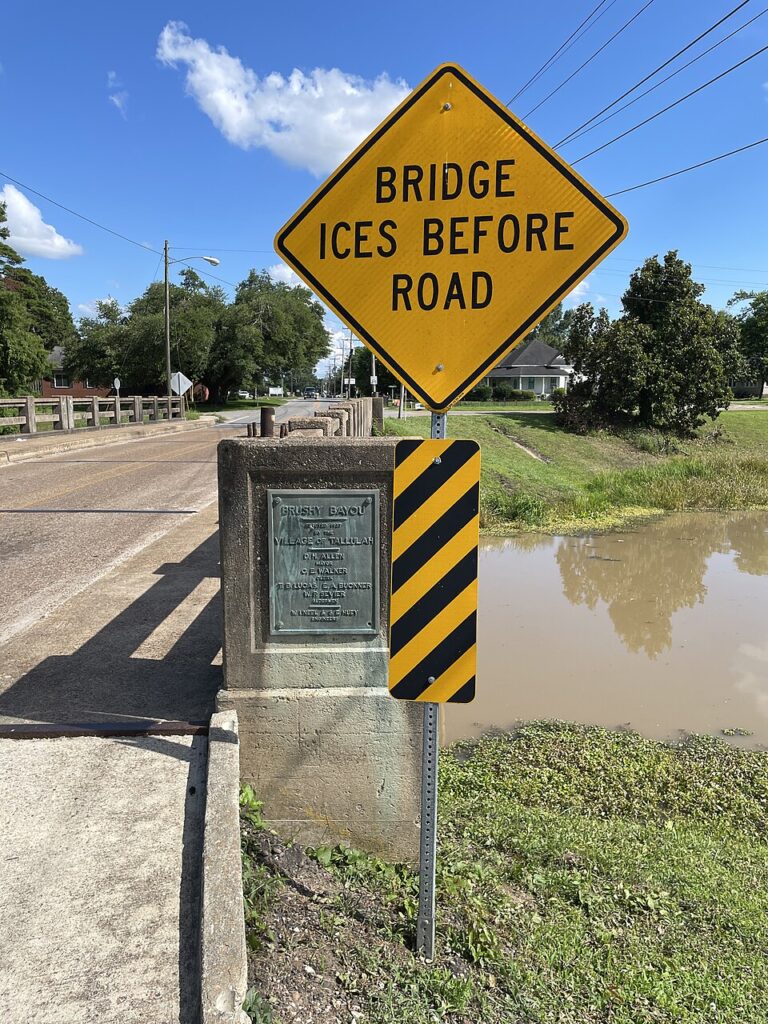
Bridges and overpasses
Exposed to cold air on both sides. First to freeze.
Shaded corners
No sun means frost can last into the afternoon.
Melt and runoff
Water that refroze overnight, often near curbs and drains.
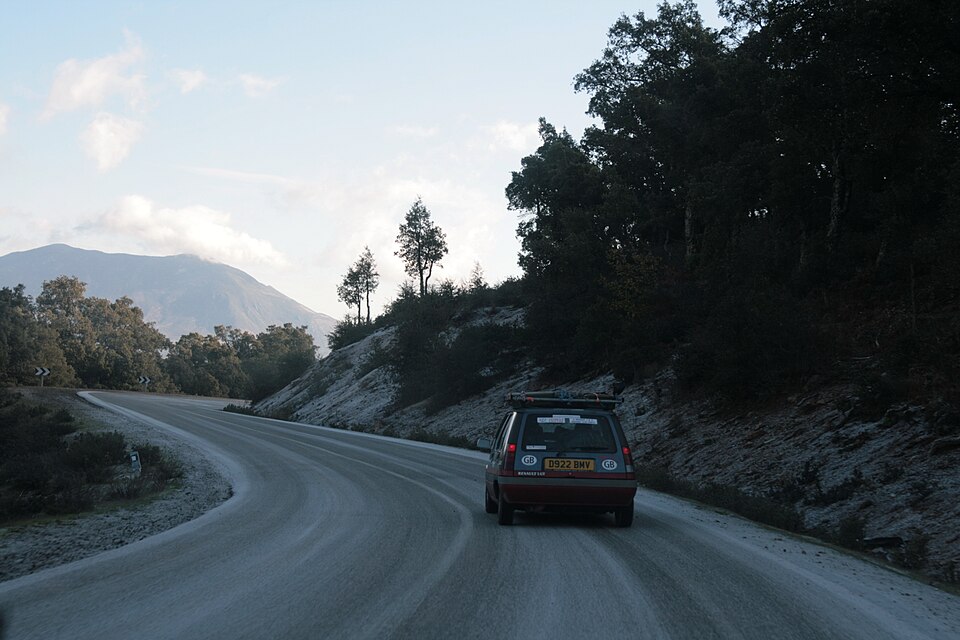
That is why the check above treats anything at 40 °F (4 °C) or below as near freezing. It is a cautious margin of our own, not an official line. If there was frost overnight, wait for the sun to do its work before you set off.
This is what black ice looks like from the saddle: nothing, until the front tire lets go. Visordown’s clip shows a rider caught out on a country road, who got up unhurt.
3. Your hands and body
Your hands work the clutch, brake and throttle, and cold hands get slow and clumsy long before they hurt. That is the real limit for most riders.
Finger skin temperature and hand performance
Thresholds from the review by Heus and colleagues. 20 °C is 68 °F, 15 °C is 59 °F.
Research on cold and manual work, summarized in a review by Heus and colleagues, puts the start of the decline around a finger skin temperature of 20 °C (68 °F), with severe loss at 15 °C (59 °F) and below. Your fingers reach that long before the air does.
Stop and warm up if you notice
❌ Numb fingers, or fumbling the controls
❌ Shivering you cannot stop
❌ Confusion or poor decisions
❌ Drowsiness or exhaustion
Shivering, exhaustion, confusion, fumbling hands, memory loss, slurred speech and drowsiness are the CDC’s warning signs of hypothermia. Get off the bike and get warm.
Time matters as much as temperature. A 30-minute ride at 35 °F is a different decision from four hours at 35 °F, because cold builds up and nothing on the bike lets you move around to warm up.
Cold tires: less grip, less pressure
Tires grip best warm, and on cold roads they take longer to get there, if they get there at all. Ride the first miles gently: smooth braking, no big lean angles.
Pressure falls with temperature too. The gas law puts it at about 1 psi for every 10 °F of cooling at motorcycle pressures, so a bike set up on a warm afternoon can be under-inflated on a cold morning. Check it cold, before you ride, against your owner’s manual.
SET ON A 60 °F AFTERNOON
Correct pressure
NEXT MORNING AT 40 °F
About 2 psi low
MCrider, a motorcycle training channel, explains how cold tires and cold hands make your braking and throttle rougher than you realize, even with good gear.
What moves your limit
The wind chill and the ice do not change. Your gear changes how much of the wind chill reaches you. These are the upgrades that matter most, in order.
A windproof outer layer and good layering. Wind is the enemy, so stop it first. Our layering guide covers the system.
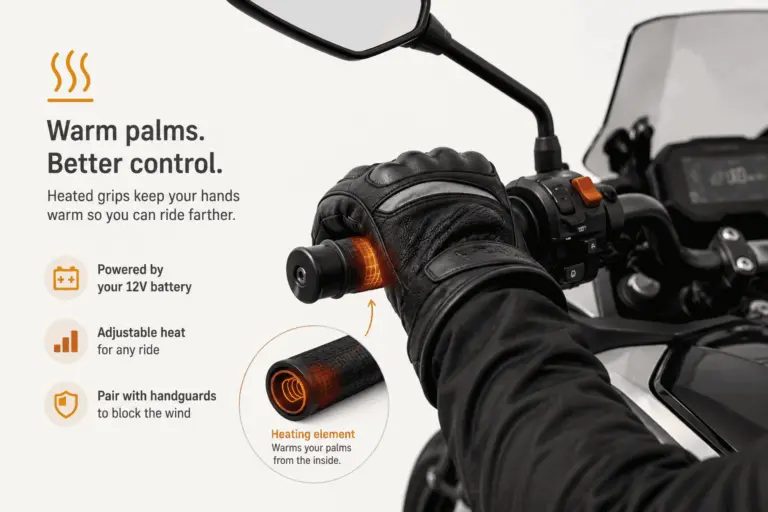
Hands: handguards, heated grips, winter gloves. They keep your controls working. See how to keep your hands warm.
Seal the neck. A neck tube and chin curtain close the gap where cold air pours in. Keep the tube below your nose so your breath does not fog the visor.
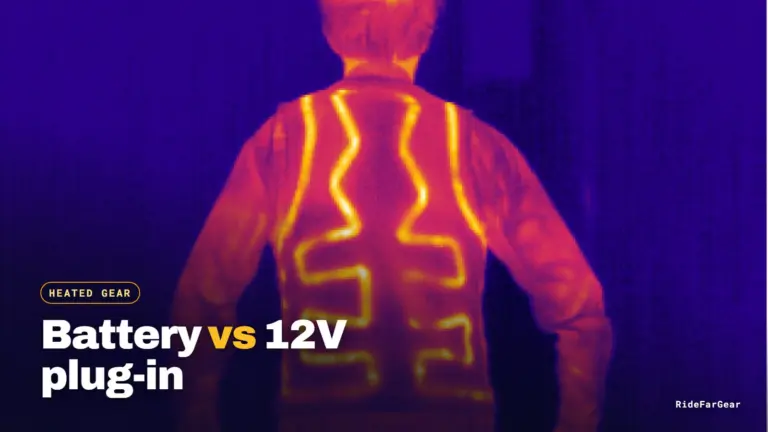
Heated gear. The biggest single jump for long cold days, as long as your bike has the power to run it. Start with heated grips, and compare battery vs 12V heated gear before you buy a heated jacket.
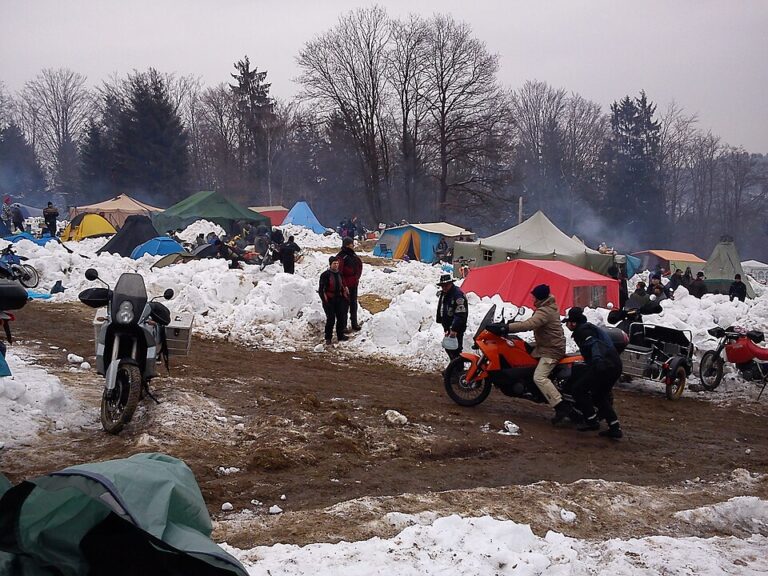
None of this changes the ice. Gear can make 30 °F comfortable. It cannot make a frosty bridge safe.
The short answer
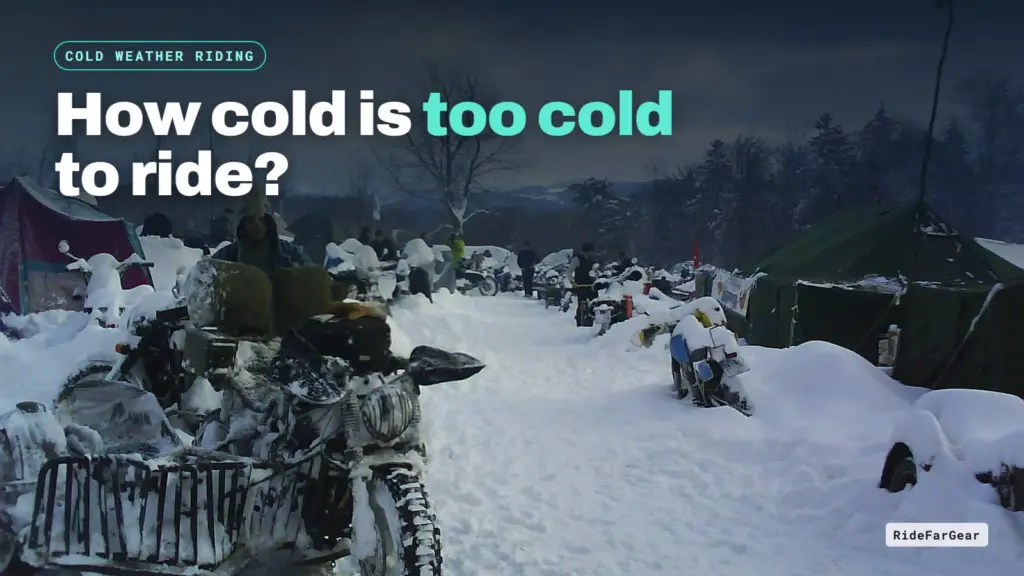
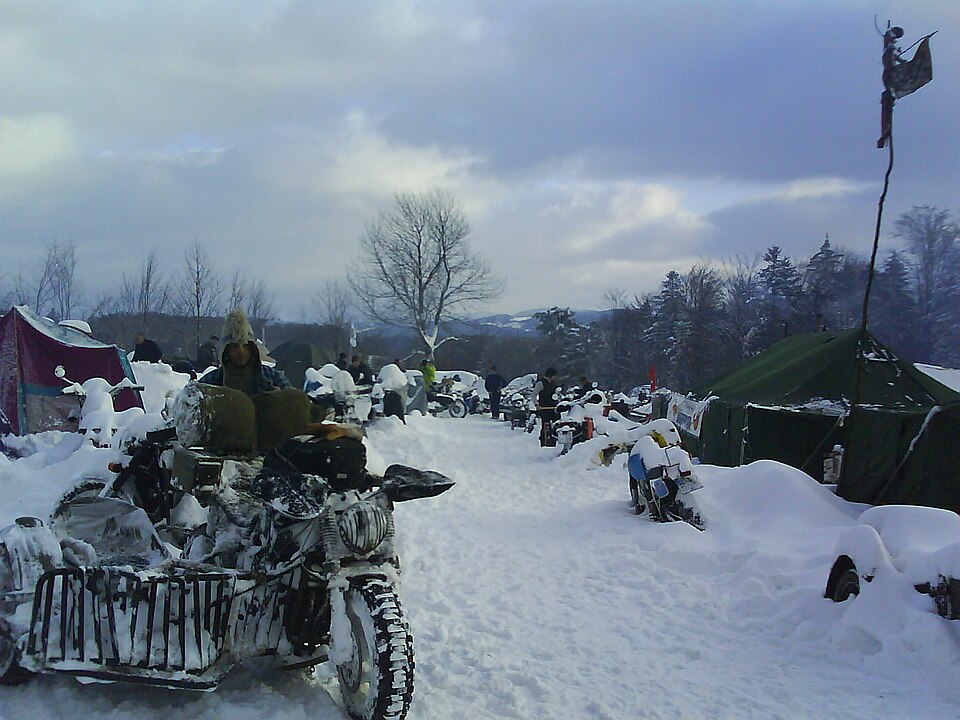
At the far end are riders who seek the cold out. At the Elephant Rally in Germany, riders camp in the snow, with the right gear and a lot of experience. For everyone else, here is the summary.
| Air temperature | What it means for a ride |
|---|---|
| Above 50 °F (10 °C) | Cool. A windproof layer is usually enough |
| 40 to 50 °F (4 to 10 °C) | Feels below freezing at highway speed. Proper layers and warm hands |
| 32 to 40 °F (0 to 4 °C) | Near freezing. Full cold gear, and treat bridges and shade as icy |
| Below 32 °F (0 °C) | Any moisture can be ice. Only on dry, clear roads, with full cold gear |
| Wet roads or frost, near freezing | Our advice: wait, take another vehicle, or ride later in the day |
Sources and assumptions
Wind chill figures are calculated from the National Weather Service formula, and the risk bands come from Environment Canada. Hypothermia signs are from the CDC. The hand performance thresholds come from the review by Heus and colleagues, as cited in occupational health research.
The 40 °F near-freezing margin and the verdicts in the check are our own cautious judgment, not official thresholds. Tire pressure drops are calculated with the gas law for tires set at 33 to 42 psi. Checked in October 2026.
Cold riding questions
How cold is too cold to ride a motorcycle?
There is no single number. It depends on the wind chill at your speed, whether the road could be icy, and how long you will ride. Near or below freezing with wet roads or overnight frost is the clearest no-go, because of ice. On dry roads, good cold-weather gear lets many riders ride well below freezing.
Is 40 degrees too cold to ride a motorcycle?
Not with the right gear. At 40 °F and 60 mph, the NWS wind chill formula gives about 25 °F, so it feels below freezing. Dress for that, keep your hands warm, and treat bridges and shaded corners as possibly icy.
Is 50 degrees too cold to ride a motorcycle?
No, but it is cooler than it sounds. The wind chill formula is only defined at 50 °F and below, and at highway speed 50 °F feels like the high 30s. A windproof layer and proper gloves are usually enough.
Can you ride a motorcycle below freezing?
Some riders do, on dry and clear roads with full cold-weather and heated gear. The risk is ice, which can form on bridges and in shade even when it is not visible. If the roads are wet or there was frost overnight, it is safer not to ride.
How long can you ride in the cold?
It depends on your gear and how cold it is, but cold builds up over time. Plan a warm stop at least every hour on long cold rides, and stop sooner if your fingers go numb or you start shivering. Those are early signs that your body is losing the battle.
How much does tire pressure drop in cold weather?
About 1 psi for every 10 °F (5.6 °C) of cooling at typical motorcycle pressures, by the gas law. A tire set to 36 psi on a 60 °F afternoon reads about 34 psi on a 40 °F morning. Check and adjust pressure cold, before you ride.
Do cold tires have less grip?
Yes. Tires grip best when warm and take longer to warm up on cold roads. Tire pressure also drops as the temperature falls, about 1 psi for every 10 °F by the gas law. Check pressure cold and ride the first miles gently.
Riding through the cold months
- How to layer riding gear for cold-weather touring
- How to keep your hands warm on a motorcycle
- How heated grips work and when they are worth it
- How to stay warm motorcycle camping in the cold
Videos by MCrider and Visordown; photos via Wikimedia Commons. Wind chill from the National Weather Service formula; risk bands from Environment Canada; hypothermia signs from the CDC; hand performance thresholds from the Heus et al. review. Always check local road conditions before a cold ride.