THE WINTER HABIT THAT BACKFIRES
“I’ll start it up every couple of weeks and let it idle, to keep it healthy.”
WHAT ACTUALLY HAPPENS
A few minutes of idling never gets the engine and exhaust hot enough to drive off the water that combustion makes. Starting it also often takes more from the battery than a few minutes of idling puts back. Prepare the bike once, then leave it alone.
Storing a motorcycle for winter comes down to six jobs done once in the fall: fuel, battery, oil, tires, cleaning and a cover. Do them properly and the bike starts in spring.
The best guide to those jobs is the one most riders never open. Honda’s owner’s manuals have a full storage section, with specific time limits, and we build on it below.
stored longer? Replace the fuel
Honda’s rule when you take the bike out again.
stored longer? Change the oil
Even if you changed it before storage.
slow charge a removed battery
Kept somewhere it cannot freeze.
In brief
- Do not idle it through the winter. Prepare it once and leave it.
- Change the oil before storage, not after, so the engine sits in clean oil.
- Look after the battery: a maintainer, or take it out and charge it monthly.
- Get the tires off the ground if you can, or at least set the right pressure.
- Use a breathable cover, never plastic, especially outdoors.
- No garage is fine, but outdoor storage needs more care.
On this page
The six jobs, in order
The order matters a little. Ride to the gas station and the oil change last, so the engine is warm and the tank is fresh when you park it.
Change the engine oil. Honda puts this first. Used oil carries combustion by-products you do not want sitting in the engine for months.
Deal with the fuel. Honda’s manuals say fill the tank and check the cap is properly seated. The full picture is below.
Look after the battery. Take it out and charge it, or keep it on a maintainer. A flat battery is the classic spring surprise.
Wash, dry and protect. Wax the paint, lube the chain, and wipe rust-inhibiting oil on chrome. Road salt left on over winter is how corrosion starts.
Take the weight off the tires. Honda’s CBR500R manual says to use a stand and a block so both tires are off the ground. If you cannot, set them to the recommended pressure.
Cover it with something breathable. Honda specifically warns against plastic and other coated materials that trap heat and moisture.
Honda also says where to keep it: an unheated, dry place, out of the sun, with little daily temperature change. Big swings between warm and cold are what make condensation form on metal.
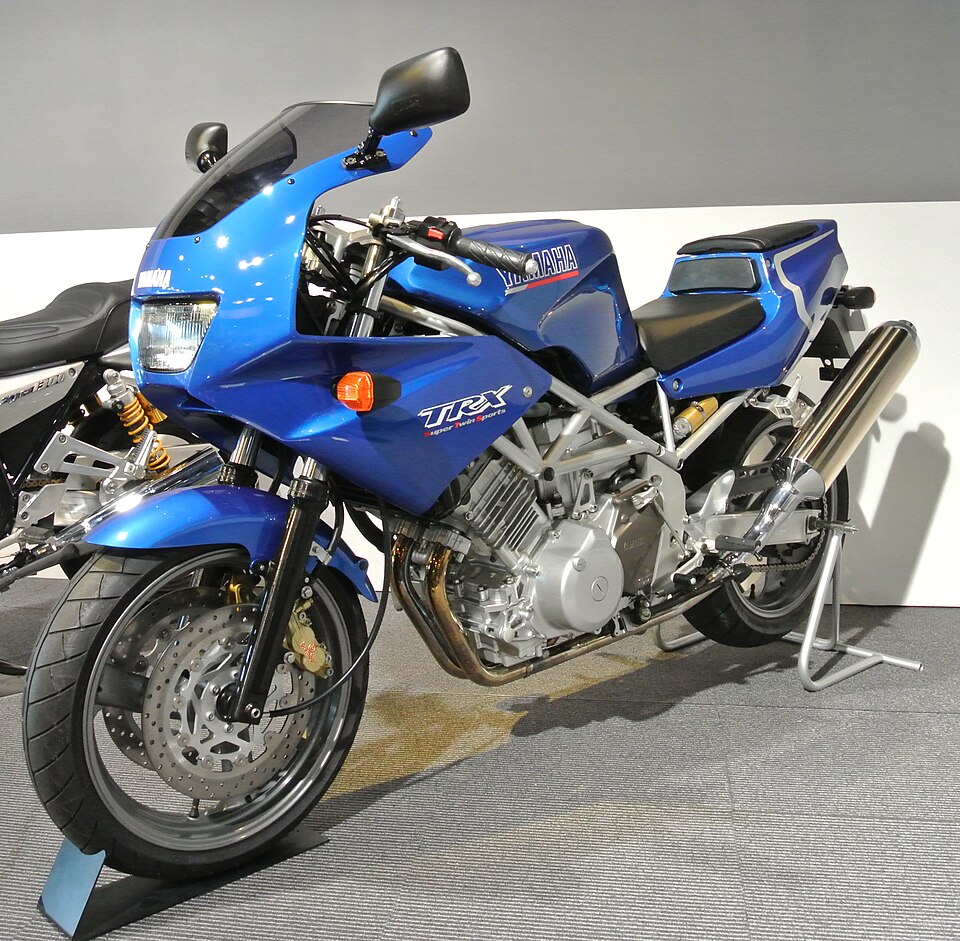
Motorcyclist Magazine’s MC Garage walks through the same fall prep on a real bike, if you would rather watch it done first.
Fuel: fill, drain or stabilize
This is where advice online disagrees most. Here is what each approach is for, so you can pick the one that matches your bike and your winter.
| Approach | What it does | The catch |
|---|---|---|
| Fill the tank | Leaves little air space, which helps stop a steel tank rusting inside. It is what Honda’s manuals say to do. | Honda also says to drain and replace fuel stored over two months. |
| Fill and add stabilizer | Slows fuel aging over the winter. Rider Magazine suggests keeping steel tanks at least three-quarters full of stabilized fuel. | Run the bike briefly after adding it, so treated fuel reaches the fuel system. |
| Drain it | Nothing left to go stale. | A bare steel tank can rust, and some makers warn against running fuel-injected bikes completely dry. |
Rider Magazine notes fuel injection copes with stale fuel far better than carburetors do. For a modern fuel-injected bike, a full tank of stabilized fuel is the low-effort choice for a normal winter.
Sitting longer than two months?
Follow your manual. Honda’s answer is to replace the fuel when the bike comes out, and some riders simply plan to ride the old tank down early in spring.
The battery
A battery left connected slowly drains itself, and the bike’s clock, alarm or ECU memory make it drain faster. That matters in winter for one reason: a flat battery freezes far sooner than a charged one.
When a lead-acid battery freezes, by charge level
Electrolyte freezing point. Longer bar = colder before it freezes
A full battery is safe in almost any garage. A flat one freezes at -10°F (-23°C). Figures from Discover Battery’s state-of-charge table for lead-acid batteries. Lithium batteries follow their maker’s own rules.
The same table works as a health check. With a multimeter on the terminals of a rested battery, 12.65 V means full and 12.24 V means half. Anything under about 12.45 V should be charged before storage. Then keep it charged, in one of three ways.
EASIEST
Smart maintainer, battery in place
It charges, then drops to a maintenance mode on its own. Needs a power outlet near the bike.
HONDA’S METHOD
Take it out, charge monthly
Charge it fully, store it where it cannot freeze and out of the sun, and slow charge it once a month.
MINIMUM
Disconnect the negative terminal
Stops the bike draining it. It still loses charge slowly, so charge it before spring.
Use a charger that matches your battery. Lithium batteries have their own charging rules, and a standard lead-acid charger is not always safe for them. Your battery’s label or manual says which.
Back to the habit at the top of this page. RevZilla’s Shop Manual explains why starting the bike now and then does more harm than good.
No garage? Your options
Plenty of riders have nowhere dry to keep a bike. Outdoor storage works, but it is the last resort, not the first. Look at these before you settle for the driveway.
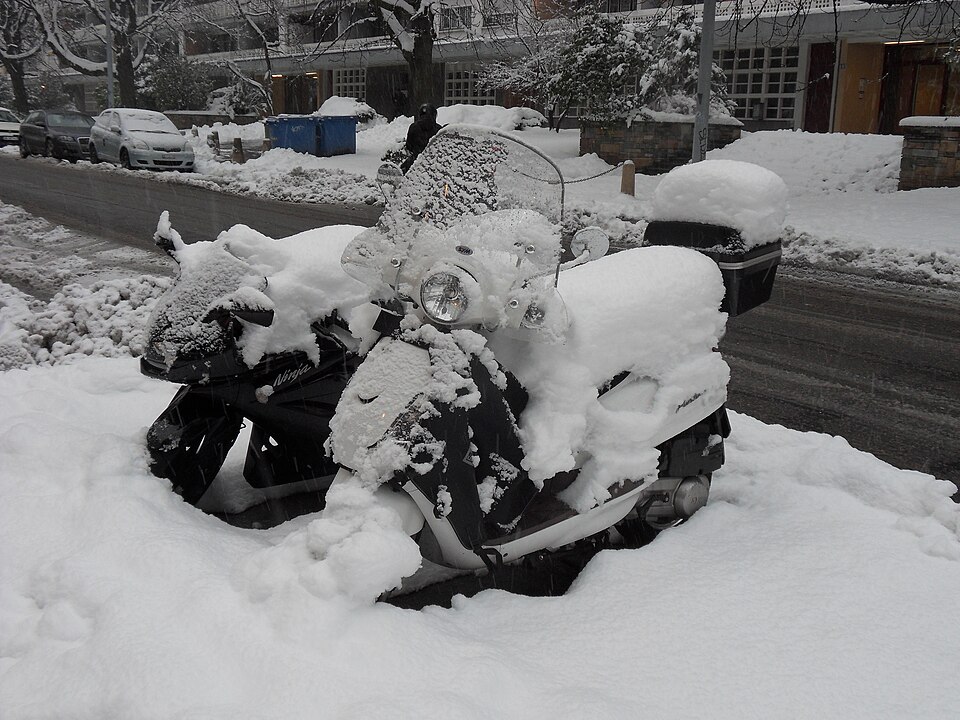
Self-storage unit
Dry and enclosed. Ask whether vehicles are allowed and whether there is power for a maintainer.
A space in someone’s garage
A friend or a shared or rented garage spot. Often the cheapest dry option.
Your dealer
Some dealers offer winter storage, sometimes tied to a service booking. Worth one phone call.
Outdoors, done properly
Fine for milder winters or when there is no alternative. Follow the extra steps below.
Storing it outdoors
Outside, the enemies are trapped moisture, the ground, animals and thieves. Honda’s advice for outdoor storage starts with a full-body motorcycle cover, and the rest follows from those four.
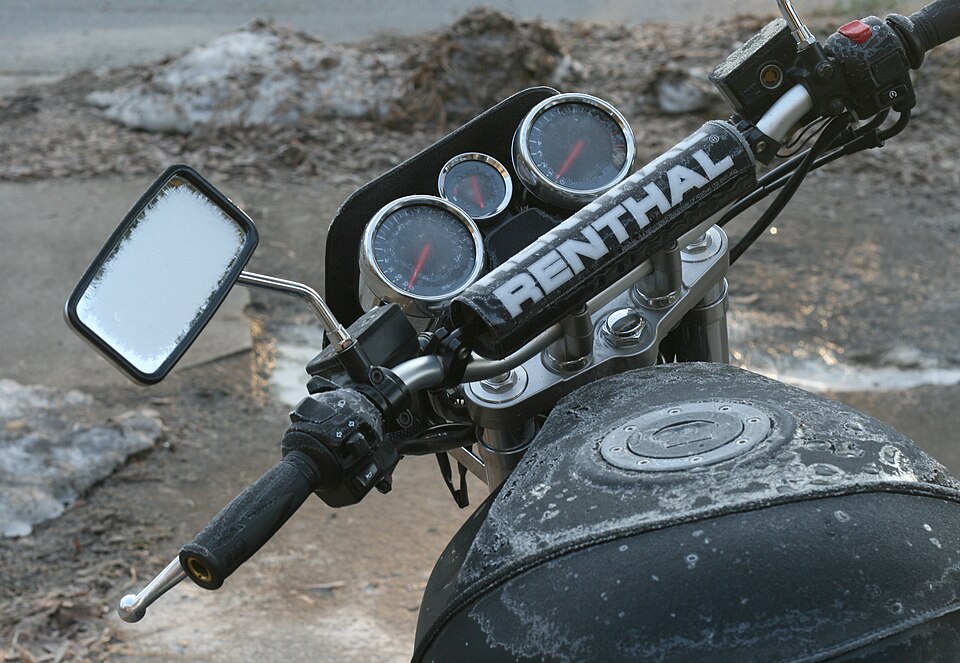
Breathable, outdoor-rated cover, tied down. Plastic tarps trap condensation. Strap the cover so wind cannot lift it and flap it against the paint.
Let it dry after rain. Honda’s CBR500R manual says to take the cover off after rain and let the bike dry. Do it on a dry day.
Keep the tires off bare ground. A sheet of plywood or a carpet tile under each tire stops ground moisture. Firm, level ground stops the stand sinking.
Block the exhaust and intake. Mice nest in them. Use a brightly colored plug and hang a tag on the bars so you remember to remove it.
Lock it, and keep the cover on. A covered bike draws less attention. A chain to a fixed point does more than a disc lock alone.
Pick the spot carefully. Away from trees, snowplow spray and road salt, and under a carport or overhang if you have one.
One more call is worth making. Ask your insurer about cover while it is stored, especially outdoors, because theft and weather damage still happen in winter.
Your storage checklist
Tick it off as you go. Switch to outdoor and the extra steps appear. Your progress is saved on this device, so you can come back to it in spring.
Winter storage checklist
0 of 0 done
BEFORE YOU PARK IT
PARKING IT
DURING THE WINTER
Waking it up in spring
Honda’s manuals have a short “removal from storage” list too. Its two time limits are the part riders forget.
- Uncover and clean the bike, and remove any exhaust plug.
- Stored more than four months? Change the engine oil.
- Stored more than two months? Drain and replace the fuel, or have your dealer do it.
- Charge and refit the battery, and lube the chain.
- Do a full pre-ride inspection, then test ride at low speed.
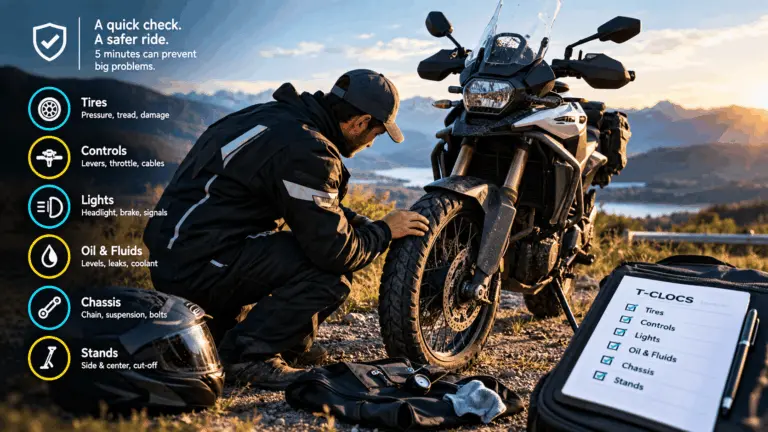
For step five, run through our T-CLOCS pre-ride checklist. Check the tire pressures carefully, because they drop over a cold winter, and test the brakes before you need them.
Sources we used
The storage and removal steps come from Honda owner’s manuals for the CBR500R, GL1800 and CRF110F. They differ in detail, so we note which one says what. The fuel guidance adds Rider Magazine‘s advice on stabilizer and tanks. Battery freezing points and voltages are from Discover Battery‘s state-of-charge table.
The outdoor steps that are not in Honda’s manuals, such as plywood under the tires and exhaust plugs, are common practice we have marked as such. Your own owner’s manual overrides all of it. Checked in October 2026.
Winter storage questions
How do I store my motorcycle for winter?
Change the oil, fill the tank, wash and dry the bike, lube the chain, put the battery on a maintainer or remove it and charge it monthly, get the tires off the ground or set them to the right pressure, and cover the bike with a breathable cover. Store it somewhere dry with little temperature change.
Should I start my motorcycle during winter storage?
It is better not to just idle it for a few minutes. A short run never gets the engine and exhaust hot enough to drive off the moisture combustion produces, and starting it takes more from the battery than idling puts back. Prepare the bike properly once and keep the battery on a maintainer.
Should I drain the gas or use a fuel stabilizer?
Honda’s owner’s manuals say to fill the tank before storage, and to drain and replace fuel that has been stored for more than two months. Many riders fill the tank with stabilized fuel instead, which Rider Magazine supports for steel tanks. Draining a steel tank completely can let it rust. Follow your own manual.
Can I store my motorcycle outside in winter?
Yes, with extra care. Use a breathable outdoor cover strapped down against the wind, keep the tires off bare ground, plug the exhaust against rodents, lock the bike, and let it dry out after heavy rain. A storage unit or a space in someone’s garage is better if you can find one.
Should I take the battery out of my motorcycle for winter?
Either remove it or keep it on a smart maintainer. Honda’s method is to remove the battery, charge it fully, store it where it cannot freeze and out of direct sunlight, and slow charge it once a month. If you leave it in place without a maintainer, at least disconnect the negative terminal.
Will my motorcycle battery freeze in winter?
Not if it stays charged. Discover Battery’s table puts the freezing point of a fully charged lead-acid battery at about -75°F (-59°C), but a discharged one at about -10°F (-23°C). Keep it on a smart maintainer, or store it somewhere it cannot freeze and charge it once a month.
Do motorcycle tires get flat spots in storage?
Sitting in one position for months puts constant load on the same patch of tire. Honda’s CBR500R manual recommends a stand and a block so both tires are off the ground. If that is not possible, inflate them to the recommended pressure and keep them off bare concrete.
Keep your bike ready
- The complete pre-ride motorcycle checklist (T-CLOCS)
- How to fix a flat tire on the road
- How to waterproof your motorcycle luggage
- More maintenance and prep guides
Battery freezing points from Discover Battery; videos by Motorcyclist Magazine and RevZilla; photos via Wikimedia Commons. Storage and removal steps from Honda owner’s manuals (CBR500R, GL1800, CRF110F); fuel guidance from Rider Magazine. Always follow the owner’s manual for your own motorcycle.